

You just discovered that a company shows "dissolved" status on state records. What does that actually mean? More importantly, what happens to debts, contracts, and legal obligations when a business officially ceases to exist?
Company dissolution isn't as simple as closing the doors and walking away. There's a legal process that affects everyone connected to the business: owners, employees, creditors, and customers. Understanding what dissolution really means could save you from unexpected liabilities or help you properly navigate closure.
We're breaking down exactly what happens when a company dissolves, why it happens, and what you need to know to protect yourself.
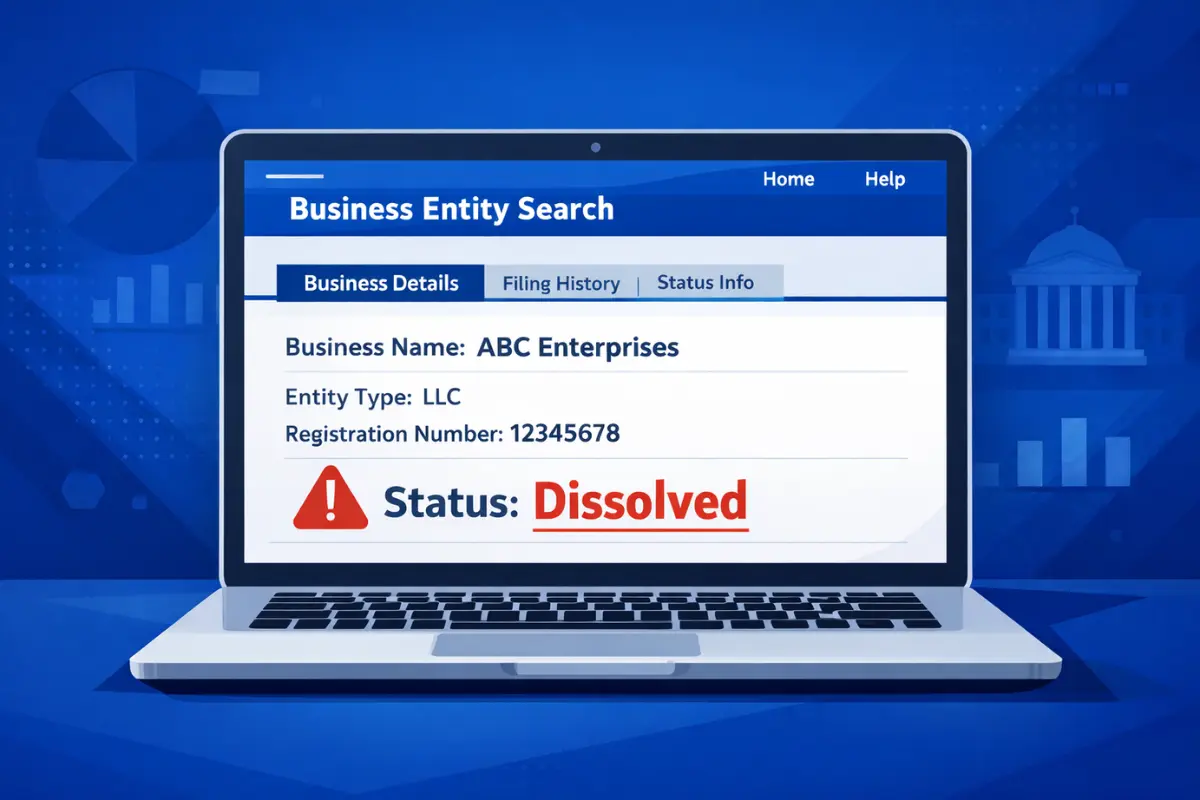
Company dissolution definition: When a company is dissolved, the business entity has been legally terminated and no longer exists. The company can't conduct business, enter contracts, or maintain legal standing.
Dissolution doesn't erase debts: Business liabilities don't disappear. Creditors can still pursue collection, and owners could face personal liability depending on business structure and circumstances.
Two paths to dissolution: Companies dissolve voluntarily when owners decide to close, or involuntarily through administrative dissolution for failing to meet compliance requirements.
The process matters: Properly dissolving requires settling debts, filing final tax returns, and formally notifying the state. Skipping these steps leads to ongoing tax obligations and potential personal liability.
Reinstatement is possible: Administratively dissolved companies can usually be reinstated by addressing issues and paying fees. However, the longer you wait, the more complicated and expensive it becomes.
Company dissolution marks the legal end of a business entity's existence. Once dissolution is complete, the company ceases to exist as a legal entity and can't operate, own property, or enter contracts.
This applies to all formal business structures, including LLCs, corporations, and partnerships. Understanding dissolution is important whether you're closing your own company, researching a vendor, or evaluating an investment.
When a company is dissolved, it means the business has been formally terminated through legal processes and no longer has authority to conduct business in that state.
In practical terms, the company can no longer conduct new business operations or sign contracts. Limited liability protections generally continue for pre-existing obligations but may not shield personal assets from claims related to improper distributions or post-dissolution actions. State registration is terminated, removing the business from active status. Future tax filing requirements cease once dissolution is properly completed, including final returns.
If you're managing your own business, registered agent services and compliance support can help avoid administrative dissolution from missed reports or fees.
Companies dissolve for various reasons, falling into two main categories: voluntary dissolution and involuntary dissolution.
Voluntary dissolution occurs when owners consciously decide to close their company. Common reasons include retirement, a business sale or merger, unprofitability, partnership disputes, or simply that the company accomplished its intended purpose.
According to the SBA, "Closing a business requires taking specific steps to settle obligations, including paying debts, filing final tax returns, and complying with federal, state, and local requirements."
Involuntary dissolution happens when the state administratively dissolves a company without owner consent. Common triggers include failure to file annual reports, non-payment of taxes or fees, lack of a registered agent, or fraudulent formation.
The SBA warns that failure to legally dissolve an LLC or corporation will expose you to continued taxes and filing requirements. Involuntary dissolution doesn't automatically end your obligations.
The federal side of the equation is just as unforgiving. The IRS is clear on this point: "When a business is closed, the owner must take specific steps to end federal tax responsibilities, including filing final tax returns and paying outstanding taxes." Being administratively dissolved by the state doesn't wipe your tax slate clean — those obligations follow you.
Real-world example: Sarah formed an LLC for consulting but forgot about annual reports. Two years later, the state administratively dissolved her LLC, and she still owed back fees and penalties.
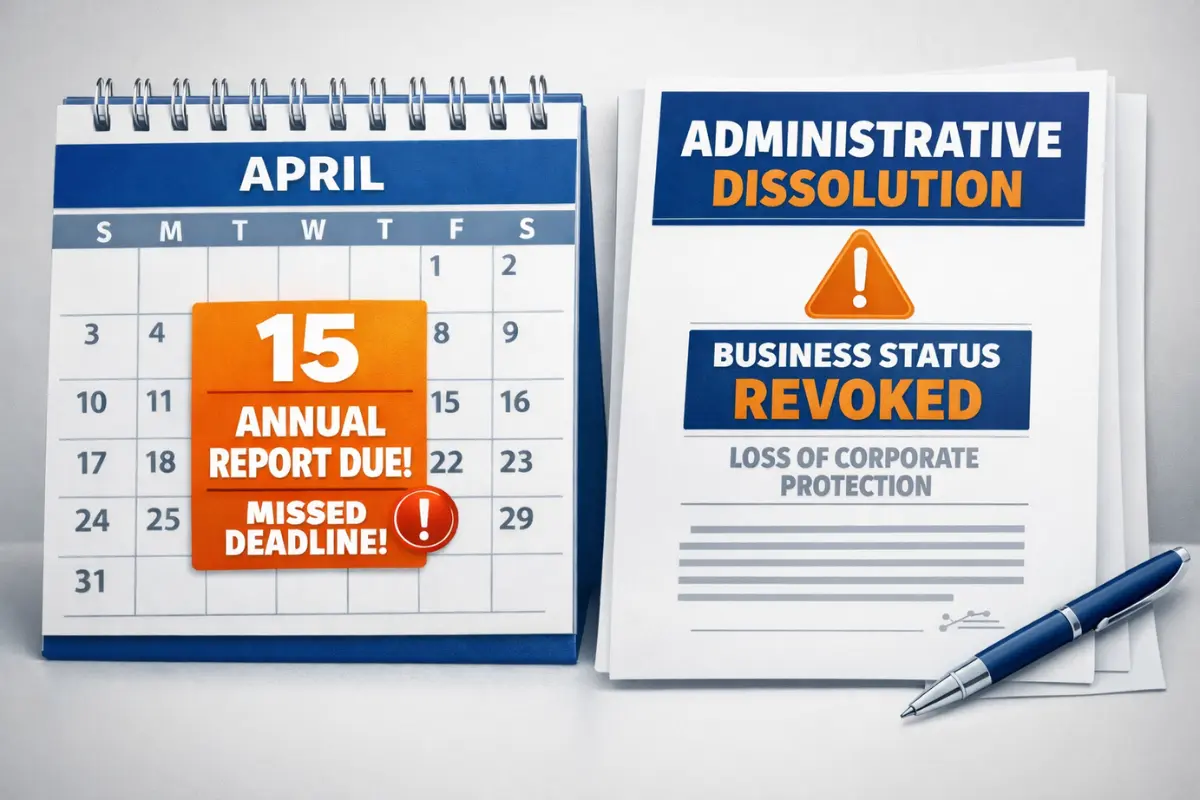
If you’re wondering what does it mean when a company is dissolved, the answer is fairly straightforward. A dissolved company has officially ended its legal existence with the state. However, the company dissolution process involves several steps to properly close the business, settle obligations, and avoid future legal or tax issues.
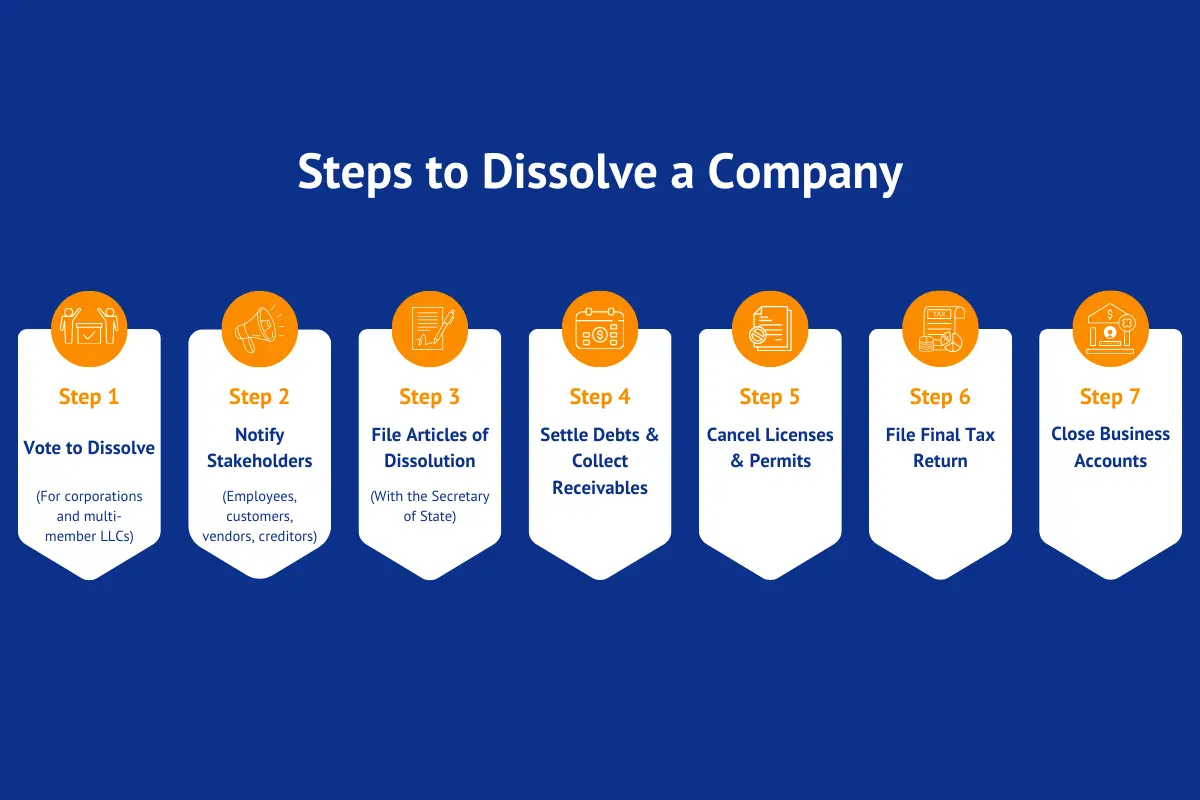
Below is a step-by-step overview of how businesses typically complete the dissolution process.
For corporations and multi-member LLCs, the first step in the company dissolution process is obtaining formal approval to close the business.
Owners, shareholders, or LLC members typically vote to dissolve the company according to the business’s operating agreement, bylaws, or state law. This vote should be documented in company records.
This step officially begins the process that leads to the dissolution of a company, ensuring all owners agree that the business will no longer operate.
After the decision has been made, the company should notify everyone who may be affected by the closure.
This may include:
Providing notice allows the company to settle contracts, finalize projects, and begin resolving any dissolved company liabilities before the business is formally closed.
The most important legal step in the company dissolution process is filing Articles of Dissolution with the Secretary of State where the business was formed.
This filing formally notifies the state that the company is ending its operations. Once approved, the business will officially show as dissolved in state records.
If someone later wants to check if a company is dissolved, they can typically search the Secretary of State’s business database to view the entity’s status.
Before the company fully shuts down, it must address any remaining financial obligations.
This includes:
Handling these obligations helps prevent future legal issues related to dissolved company liabilities.
Many businesses operate under local, state, or federal licenses and permits. These should be canceled or closed to avoid ongoing compliance requirements.
Examples include:
Failing to cancel these registrations may result in continued renewal fees or compliance notices even after the company has been dissolved.
Another critical part of the company dissolution process is filing final tax returns.
Businesses must notify tax authorities that the company has closed and file any required final returns, including:
Most tax forms include a box to indicate the final return, signaling that the business is no longer operating.
The final step is closing all remaining business accounts and financial relationships.
This includes:
Once these accounts are closed and all filings are complete, the company dissolved meaning becomes clear: the business has fully ceased operations and no longer exists as an active legal entity.
Many business owners ask, when a company is dissolved what does it mean for future obligations? In most cases, the business can no longer conduct operations, but certain responsibilities may still remain, such as resolving taxes or outstanding debts.
In some situations, it may even be possible to reverse the process. Many states allow reinstating a dissolved company if the owners act within a certain timeframe and resolve the issues that caused the dissolution.
Understanding the reasons for company dissolution, whether voluntary closure, financial challenges, or administrative issues with the state, can help business owners make informed decisions about closing or possibly reinstating their business in the future.
One of the biggest misconceptions about dissolution is that it automatically erases business debts. It doesn't.
Outstanding debts remain valid claims against remaining company assets. Personal guarantees keep owners personally liable even after dissolution. Unpaid taxes survive dissolution, as the IRS and state tax agencies can pursue collection from business assets and, in some cases, from responsible individuals. Pending lawsuits can continue, and existing contracts may still bind the company or its successors.
Liabilities follow a strict priority order: secured creditors with collateral get paid first, then priority claims like wages and taxes, then general creditors on a pro-rata basis, and finally owner distributions, only after all creditors are satisfied.
Real-world example: Marcus dissolved his LLC owing $50,000 with only $30,000 in assets. He properly distributed funds to creditors pro-rata. Because his LLC was properly maintained with no personal guarantees, he wasn't personally liable for the remaining $20,000.
Whether you're considering doing business with a company, researching a potential investment, or managing compliance for your own entity, knowing how to check if a company is dissolved is essential.
Checking a company's status is usually free. Search your state’s Secretary of State (or equivalent) business entity database by company name or registration number to view whether it is active, dissolved, or in another status. You can also contact the relevant state business filing office directly if online records are unclear or unavailable.
A dissolved company can't legally enter new contracts, making agreements unenforceable. Providing services to dissolved entities increases your non-payment risk. Legal disputes become complicated since dissolved entities lack legal standing. Investors need verification to ensure they're dealing with legitimate, active entities.
Discovering your company has been administratively dissolved doesn't mean it's gone forever. Most states allow reinstatement by addressing the issues and paying fees and penalties.
Start by identifying why the state dissolved your company; common reasons include missed annual reports, unpaid taxes, or lack of a registered agent. From there, file all overdue reports, settle back taxes and penalties, appoint a new registered agent if needed, and submit the official reinstatement form with supporting documents. Reinstatement fees typically range from $50 to several hundred dollars depending on the state.
Reinstatement comes with real hurdles. There are often time limitations of two to five years. Another business may have claimed your company name. Accumulated fees grow over time. You may need to file back tax returns, and your liability protection was absent during the dissolution period.
That's a lot to navigate while also trying to get your business back on track. Working with a professional service means you won't miss a step, because we know exactly what each state requires and can get you back to active status without the costly back-and-forth.
Dissolution and compliance can get complicated fast. We handle business formation, registered agent services, and ongoing compliance support so you don't have to navigate it alone. Whether you're closing a business or reinstating a dissolved one, we'll guide you through every step. Contact us today to get started.
Understanding what it means when a company is dissolved protects you from significant legal and financial risks. Whether you're closing your own business, verifying a vendor's status, or researching investment opportunities, knowing how dissolution works helps you make smart decisions.
The key takeaways: dissolution legally terminates a business entity, but debts and obligations don't automatically disappear. The company dissolution process requires specific legal steps completed properly to avoid ongoing liabilities. Administrative dissolution happens when you fall behind on compliance requirements, but reinstatement is usually possible if you act quickly.
Staying on top of compliance requirements prevents administrative dissolution and the headaches that come with it. If you're closing a business, following the proper dissolution process protects you from unexpected liabilities down the road.
Employees are terminated and receive final paychecks including wages, accrued vacation, and any severance owed. The company provides final W-2 forms and notifies employees about COBRA insurance continuation options and unemployment benefits. In bankruptcy situations, employees may have priority claims for unpaid wages that get paid before other creditors.
Shareholders receive remaining asset distributions only after all creditors are paid in full. If debts exceed assets, shareholders typically receive nothing. Their ownership stake becomes worthless once dissolution completes, though they may have tax loss deductions available. Shareholders generally aren't personally liable for corporate debts unless they personally guaranteed obligations or the corporate veil is pierced due to improper business practices.
Existing contracts don't automatically terminate with dissolution. The dissolved company or its successors may still be bound by contract terms. However, the company can't enter new contracts since it lacks legal standing. Counterparties might have grounds to terminate contracts or seek damages for breach if dissolution prevents the company from fulfilling its obligations.
Directors can face personal liability after dissolution in certain circumstances, particularly if they engaged in fraudulent activities, breached fiduciary duties, or made improper distributions to shareholders while creditors went unpaid. Directors who personally guaranteed company obligations remain liable for those debts. However, directors generally aren't personally liable for ordinary business debts if they fulfilled their duties properly and maintained corporate formalities.
Keep tax returns and supporting documents for at least seven years in case of IRS audits. Maintain employment records including payroll and personnel files for four years minimum. Preserve corporate governance documents like articles of incorporation, bylaws, and meeting minutes indefinitely. Keep financial statements, bank records, and accounting books for seven years. Retain contracts and legal documents for seven years after expiration or resolution.
Voluntary strike off is a simpler, cheaper way for a solvent, non-trading company with minimal debts to apply to close. Compulsory liquidation is a court-ordered process for insolvent companies that cannot pay their debts, usually started by creditors, and is managed by an insolvency practitioner under court supervision.
Secured creditors have specific collateral (like property or equipment) backing their loans and are paid first from selling that collateral. Unsecured creditors have no collateral and are paid later from whatever assets remain; if those assets are insufficient, they receive only partial payment or sometimes nothing.
When dissolving a business, you must file final federal, state, and local tax returns for the year of closure and mark them as final. You typically need tax clearance showing all taxes are paid, then notify the IRS to close your EIN and file dissolution paperwork only after tax obligations are settled. Because rules vary by business type and state, consulting a tax professional helps you avoid missed filings and penalties.
No. Once dissolution appears in the state's records, the legal entity no longer exists and loses authority to operate. The company can't enter contracts, collect payments, or engage in any business transactions. You can typically restore your ability to operate by reinstating the dissolved company, and you will need to file overdue annual reports, pay taxes owed, and pay reinstatement fees. Until reinstatement completes and your company status returns to active, all business operations must cease to avoid personal liability.
When a business enters dissolution, distributing assets follows strict legal rules. First, the company's assets must pay outstanding debts in priority order, starting with secured creditors, then priority claims like wages and taxes, and finally unsecured creditors. Business owners can't take remaining assets until creditors are fully satisfied. Outstanding liabilities don't disappear, and if business owners are personally liable through guarantees, they remain responsible even after the company no longer exists. Keep records showing the company's assets were distributed according to legal obligations.