

Picture this: You just filed your LLC paperwork and you're staring at a form asking who should be your registered agent. Your first thought? "Can I just do this myself and save some money?"
You're not alone. Thousands of entrepreneurs wonder whether they can act as their own registered agent when forming a business. In most states, you can legally serve in this role if you meet state requirements, but this choice can significantly affect your privacy, availability, and legal compliance.
Choose wrong and you risk having your home address listed publicly in state records, missing crucial documents that could lead to default judgment, or facing compliance issues that jeopardize your business's good standing. In this guide, MyLLC walks you through the legal requirements, hidden costs of being your own agent, and when professional registered agent services make more sense for protecting your business.
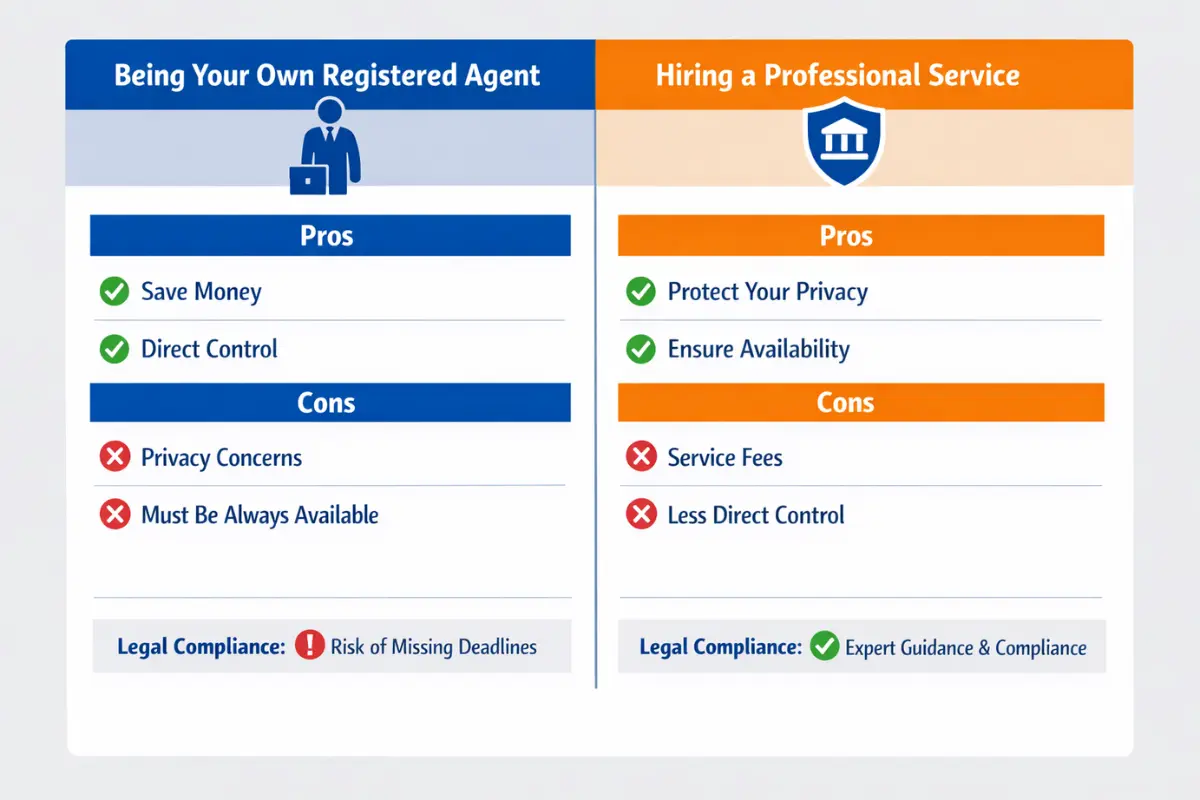
Yes, business owners can legally serve as their own registered agent: Most states allow it, but you must maintain a physical address in the state and be available during normal business hours to accept service of process.
Being your own agent has serious trade-offs: Your home address becomes public record, you must be present during standard business hours, and missing important documents can result in default judgments.
Professional services offer key benefits: Privacy protection, guaranteed availability, compliance reminders, and professionalism even when you travel.
Registered Agent and owner are different roles: The registered agent receives legal documents while the owner holds equity and makes business decisions.
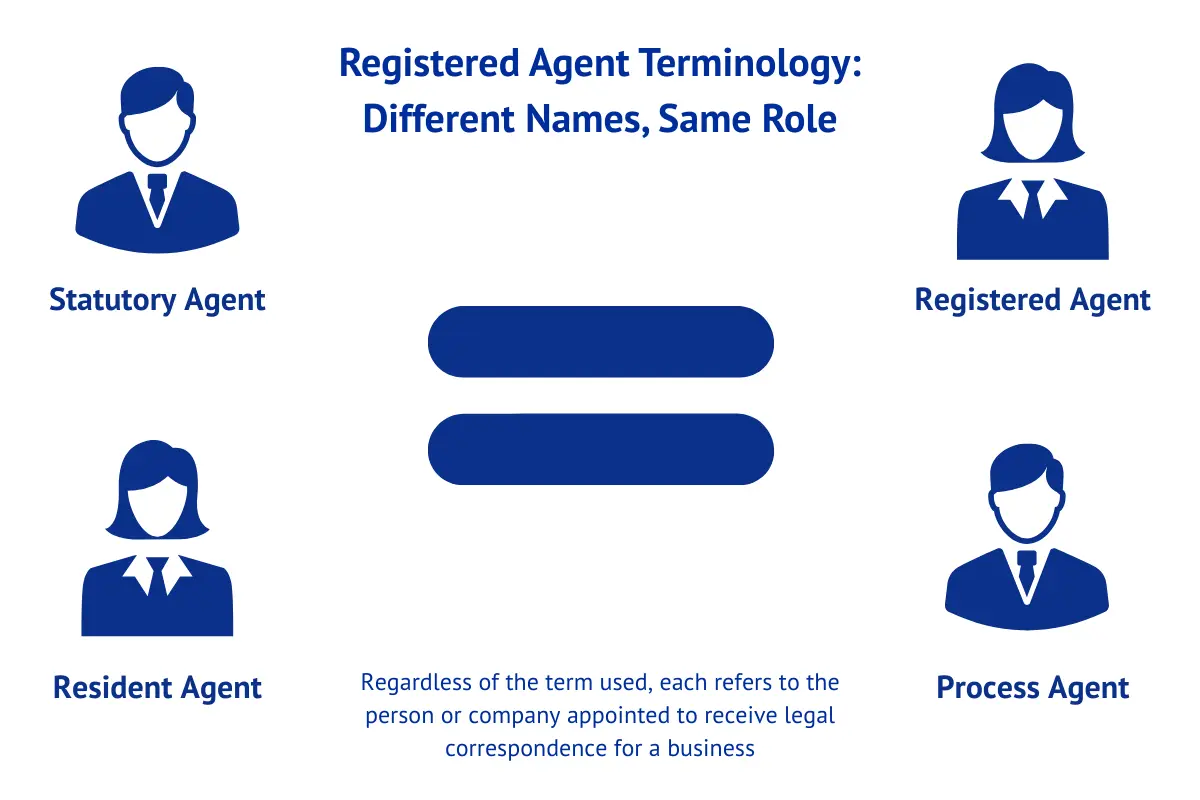
A registered agent (also called a statutory agent or resident agent) is an individual or business entity designated to receive legal and official government documents, including service of process, on behalf of a business entity that is registered with a state.
According to Forbes, "A registered agent is required for LLCs and corporations and must be available during normal business hours to receive legal documents and state notices."
The registered agent receives service of process (lawsuits delivered by a process server), compliance notices, annual report reminders, tax documents, legal subpoenas, and notices about your company's good standing. Every business entity must have one to conduct business legally.
The U.S. Chamber of Commerce explains that "Many states allow business owners to act as their own registered agent, but the agent must have a physical address in the state and be available during standard business hours."
Physical Address: Your agent needs a street address in the state because P.O. boxes do not work; a process server must physically deliver legal documents. This registered agent address becomes public record that anyone can search.
Availability: The agent must be available during regular business hours (typically 9 AM to 5 PM, Monday through Friday) to accept service. Missing service of process can lead to default judgment.
Age and Residency: Individual agents must be 18+ and either a state resident or a business entity authorized to conduct business there. Commercial registered agents automatically meet these requirements.
Consent: The person or entity must formally agree to serve. You can't list a friend or family member without their knowledge and consent.
Yes, if you meet the requirements, you can serve as your own agent. But what does being your own agent actually mean day-to-day?
Cost savings: Professional registered agent services typically cost about $100 to $300 dollars per year, so handling this role yourself can reduce ongoing expenses for your business.
Direct receipt: You get legal documents and official notifications immediately without middleman delay.
Practical for some small operations: If you operate a small business from a fixed office where you are consistently present during normal business hours and meet your state’s legal requirements for a registered agent, serving as your own agent can be a workable arrangement.
The disadvantages often significantly outweigh cost savings.
Your address becomes permanently public: If you use your home as your registered office address, it appears in public business records that anyone can access online. Strangers, competitors, and marketing companies can look up where you live. This creates privacy concerns and leads to unwanted solicitations. Once your address is listed publicly in state records, it's extremely difficult to remove.
Constant availability required: Travel for meetings? Vacation? Running errands? If legal documents arrive and you're not physically present to accept legal service, you might miss critical deadlines. A process server doesn't care about your schedule—some will only attempt delivery once.
Embarrassing public service: Getting served with a lawsuit by a process server at your business office in front of employees or clients damages your professional image. Professional registered agent services handle this discreetly.
Relocation complications: Move to a new home or business address? You must file paperwork to update your registered agent address. Miss this and you face compliance issues or lose good standing.
No compliance support: Professional services provide proactive reminders for annual reports and business licenses renewals. As your own agent, you track these alone. Miss an annual report and your business entity can fall out of good standing or be administratively dissolved.
Multi-state complexity: Need to transact business in multiple states? You need a registered agent with a physical address in each one. Managing this yourself is time consuming and creates logistical nightmares.
You can legally serve as your own registered agent, but in practice, hiring a professional service is often the smarter choice. For a modest annual fee, professional registered agent companies handle the hassles for you. The privacy protection, guaranteed availability, compliance support, and peace of mind they offer usually far outweigh the typical $100 to $300 yearly cost. Unless you operate a very small business from a dedicated office where you're present every business day, using a professional registered agent simply makes more sense for safeguarding both your business and your personal information.
The registered agent is not automatically the owner. They're the designated recipient of legal documents with no ownership interest unless they're also an LLC member. Many businesses use commercial registered agents or law firms with zero ownership stake.
LLC Owner: Holds equity, makes decisions, receives profits, has voting rights.
Registered Agent: Receives legal documents during business hours, maintains the registered office address, forwards official notices, has no decision-making authority.
Professional services maintain physical addresses in every state and immediately forward documents. Benefits include privacy protection (your home address stays off public record), guaranteed availability during all business hours, professional handling of process server encounters, compliance support with reminders, mail forwarding, and multi-state coverage for $100–$300 per year, which is less than a dollar a day.
A friend or family member can serve if they meet residency requirements, have a reliable physical address, are available during normal business hours, and understand the responsibility. However, if they move or become unavailable, you face administrative headaches. Their address also becomes public record.
While using a friend or family member might seem like a middle ground between doing it yourself and hiring a service, most businesses find that professional registered agents offer superior reliability without the potential strain on personal relationships. For most businesses, commercial registered agents offer superior reliability.
Can the business owner be the registered agent? Yes, it's legal in most states. But the real question is whether you should. The privacy risks and availability demands often outweigh the modest cost savings. Once your home address becomes public record, it's there permanently. Miss one process server delivery and you could face default judgment or lose good standing.
Professional registered agent services offer clear advantages that make the $100-$300 annual investment worthwhile. They protect your privacy by keeping your home address off public records, guarantee availability during all business hours so you never miss crucial documents, provide compliance reminders for annual reports and business licenses, and handle service of process discreetly. You're free to travel, meet clients, or focus on growing your business without worrying about missing important legal documents that could devastate your company.
Most successful business owners quickly realize that commercial registered agents aren't an expense; they're an investment in peace of mind and professional operations. For less than a dollar per day, you get expert handling of legal compliance, privacy protection, and the freedom to run your business from anywhere. That's why professional registered agent services make sense for serious entrepreneurs who want to conduct business with confidence.
We understand the challenges business owners face in managing compliance while running their companies. MyLLC offers comprehensive registered agent services with complete privacy protection, reliable receipt during all business hours, instant digital notifications, compliance reminders for annual reports and business licenses, and nationwide coverage for businesses operating in multiple states.
Ready to stop worrying? Contact MyLLC to set up professional registered agent service. We handle the details so you can keep your operations running smoothly.
A registered agent receives crucial documents such as service of process (lawsuit notifications delivered by a process server), tax forms from state and federal agencies, annual report reminders to maintain compliance, official notices about business licenses and deadlines, correspondence from government agencies about your company's good standing, and other legal or official notifications required for lawful business operations.
The registered agent accepts these documents during regular business hours and promptly forwards them to business owners, ensuring nothing important is missed that could lead to penalties, compliance violations, or default judgments in legal proceedings. This consistent availability is what sets professional registered agent services apart from relying on yourself or a friend or family member who may not always be available during standard business hours.
Yes, a law firm or commercial registered agent can absolutely provide registered agent services for your limited liability company, corporation, nonprofit corporation, or other business entity. These professional service providers maintain a registered office and physical address in the state to accept service of process and receive legal documents on behalf of multiple businesses.
Commercial registered agents offer several advantages, including mail forwarding, protecting your home address from public state records, ensuring trained staff are available during standard business hours to handle legal service, managing compliance tracking and reminders, and offering coverage across multiple states if your business operates beyond your home state. This is especially valuable for business owners who travel frequently or manage operations in several states, as commercial registered agents guarantee that someone is always available to receive important documents on your company's behalf.
When you serve as your own agent, your personal or business address becomes part of the public record in state filings and is searchable online for anyone to find. Your home address appears in state databases, which can create serious privacy concerns and expose you to unwanted solicitations, junk mail, or even security risks. Once your address is made public, it's nearly impossible to remove it.
Commercial registered agents protect your privacy by using their professional business address as the official registered office on public record. Their name and office location appear in state filings instead of your personal information. They receive official notifications, legal documents, and other important notices on your behalf and forward them to you privately. This privacy safeguard is especially valuable for home-based businesses, solo entrepreneurs, LLC members, and anyone concerned about personal safety or security.
If you're your own registered agent and traveling when a process server attempts to deliver legal documents during business hours, you risk missing important notices that require immediate attention. The process server typically attempts delivery during standard business hours when you might be unavailable, and most states don't require multiple attempts—one delivery attempt may be considered sufficient service.
Missing service of process can lead to serious consequences, including default judgments in lawsuits where the court rules against you automatically because you never responded, compliance violations with state laws that can jeopardize your business licenses, or even your business entity losing good standing with the state. This time-consuming risk is why many business owners choose professional registered agent services that guarantee someone is always available at the registered office to accept legal documents. Commercial registered agents ensure you never miss crucial documents, even when you're away from your business office.
In most states, a registered agent must either be an individual who lives in the state with a physical street address or a business authorized to operate there. The agent must maintain an in-state office (not a P.O. box) and be available during normal business hours to receive legal documents. Anyone, such as an LLC member, owner, or another person, can serve as agent if they meet these requirements. Professional registered agent services automatically qualify by maintaining offices in each state where they operate, allowing businesses to meet residency rules easily across multiple states.