

You've done the hard part, or maybe you're still getting started. If you haven't formed your business yet, learn how to start an LLC before diving in. Once your LLC is formed and you're ready to get down to business. However, before you can open a bank account, hire employees, or file taxes, there’s one more important step: obtaining your EIN.
An Employer Identification Number is your LLC’s federal tax ID, and without it, you can’t do much. That’s where MyLLC comes in. We make sure your EIN is set up correctly from day one so there are no surprises later.
In this guide, we’ll walk you through everything you need to know about obtaining an EIN for your LLC, including the requirements, application steps, common mistakes, and how to avoid them.
An Employer Identification Number (EIN) is your LLC’s federal tax ID number, issued by the IRS.
Most LLCs need an EIN to open a business bank account, hire employees, and file taxes.
Even single-member LLCs benefit from obtaining an EIN to maintain liability separation and protect their Social Security number.
Your EIN application must match your LLC’s official formation documents exactly.
Mistakes in entity classification or legal name can cause IRS delays, banking issues, or payroll complications.
Structural changes to your business may require obtaining a new EIN.
Many business owners use a professional EIN filing service to ensure accuracy and long-term compliance.
An Employer Identification Number, also called a Federal Tax Identification Number, Federal Employer Identification Number, or FEIN, is a unique nine-digit number the IRS uses to identify your business for tax purposes. It works like a Social Security number, but it’s for your company instead of you personally. Most LLCs need to apply for an EIN immediately after formation.
According to the Internal Revenue Service (IRS), an Employer Identification Number “is also known as a Federal Tax Identification Number, and is used to identify a business entity.”
Once you have your business tax ID number, you’ll use it to open a business bank account, file federal and state taxes, pay taxes as a separate entity, hire employees and run payroll, establish business credit, and keep your personal and business finances separate. Using your Social Security number for business activity puts you at unnecessary risk, and an EIN keeps things organized while reinforcing the liability protection your LLC provides.
Apply for an EIN right after forming your LLC. According to the U.S. Small Business Administration (SBA), businesses need an EIN to pay federal taxes, hire employees, open a bank account, and apply for licenses and permits.
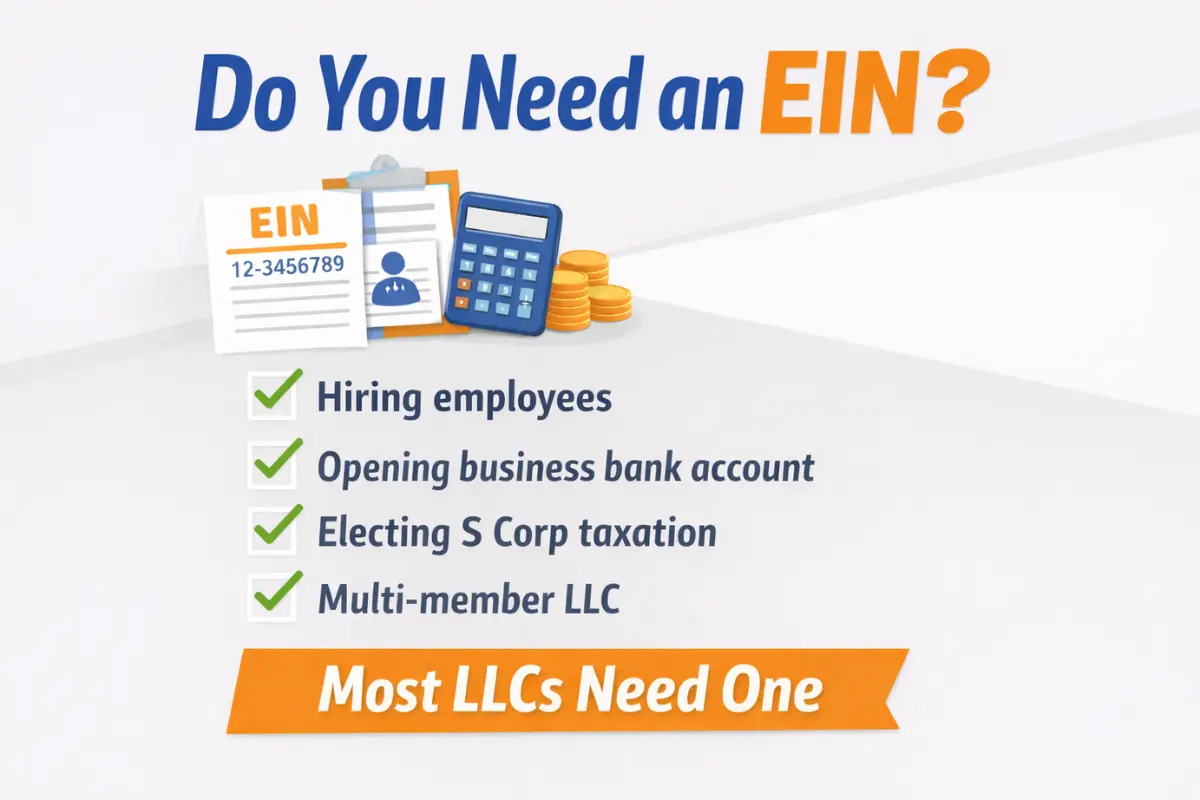
You are required to obtain an EIN if your LLC has more than one member, you plan to hire employees, you elect S-Corporation tax status, you file employment or excise taxes, or you want to open a business bank account. Even without employees, most banks won’t approve an account without one.
The information you submit must match your state formation documents precisely. This includes your business name as it appears on your formation documents, not a trade name or DBA. Before you start your IRS EIN application, have the following ready:
The exact legal name of your LLC
Physical address and mailing address for the business
Responsible party’s Social Security number or Individual Taxpayer Identification Number (ITIN)
Entity type and tax classification
Date the business began
Reason for applying
The tax classification section trips up a lot of people. How your LLC is classified for federal tax purposes, whether as a sole proprietorship, partnership, or S-Corp, has lasting consequences for how you’re taxed. If you’re not sure, get professional guidance before you submit.
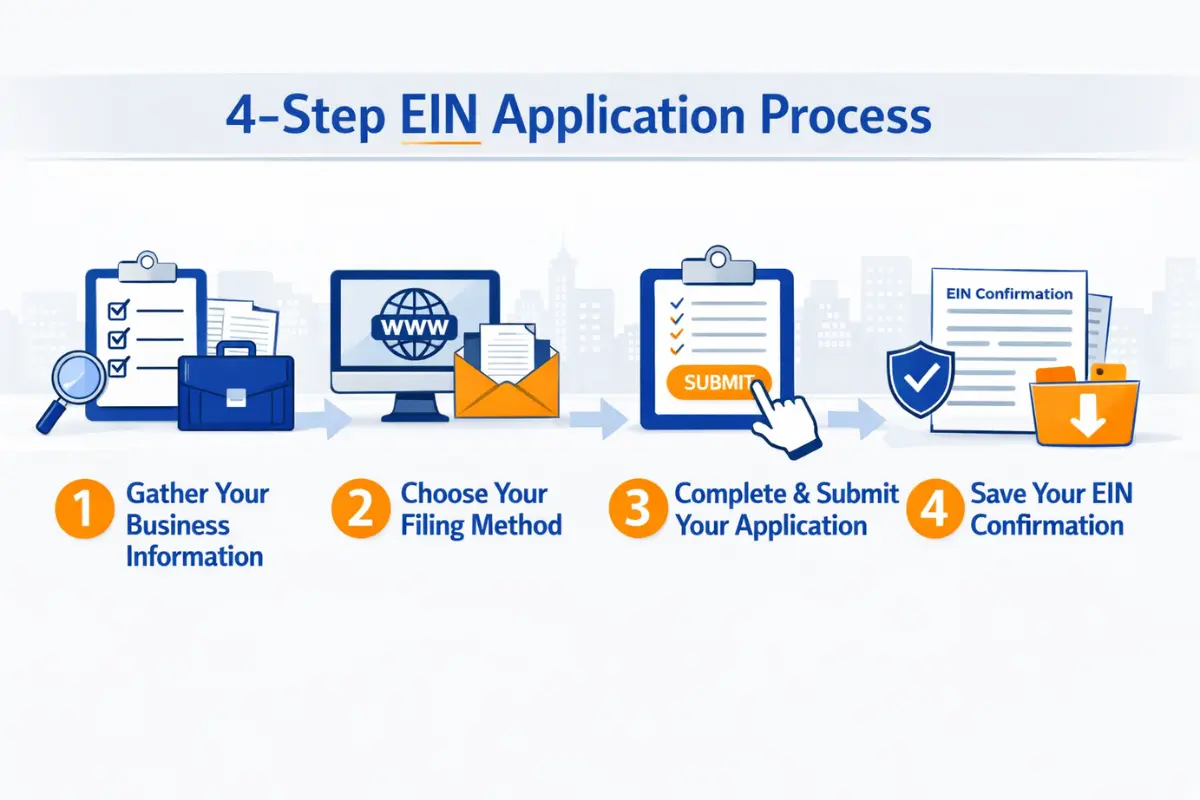
Once your LLC is officially approved by your state, you're ready to apply. Don't submit before your LLC is on record, as it can create IRS mismatches that take time to correct.
Pull together your LLC's exact legal name, physical address, responsible party's SSN or ITIN, entity type, tax classification, and start date. Double-check everything against your formation documents before moving on.
You have a few options when it comes to applying for an EIN: online through the IRS website, by fax, or by mail. Online is the fastest, but the method matters less than the accuracy of what you submit. Many LLC owners choose to work with a professional EIN filing service rather than navigating the application alone. A professional ensures your entity type, tax classification, and business details are all correctly aligned before anything is submitted, saving you from costly errors down the road.
Work through the application carefully, paying close attention to entity type and tax classification. These are the fields that cause the most problems when filled out incorrectly. Take your time here before submitting.
Once approved, save your EIN confirmation letter immediately alongside your other formation documents. You'll need it for your bank account, tax filings, and payroll setup.
Small errors have big consequences. Mistakes in your business EIN filing can lead to bank account rejection, payroll setup delays, IRS correction notices, duplicate EIN records, and tax filing inconsistencies that affect your tax returns for years. The most common culprits are applying before your LLC is approved, choosing the wrong tax classification, and entering a business name or business type that doesn’t exactly match your formation documents. Getting it right the first time is always faster than fixing it later.
In many cases, no. As stated by the IRS, businesses generally need a new EIN when ownership or structure changes.
You’ll typically need a new federal tax ID number if you convert from a sole proprietorship to an LLC, add members to a single-member LLC, change your entity type, or undergo significant ownership restructuring. Always check with a professional before making major changes to your business structure.
Possibly, and it’s easy to overlook. Your EIN is your federal tax ID number, but many states require separate registrations for state income tax, sales tax, and employer withholding. These state tax IDs are obtained through your state’s revenue department and are entirely separate from your EIN. Research your state’s requirements early so nothing slips through the cracks.
Getting an EIN isn't just about filling out a form; it's about making sure your federal tax ID is set up in a way that truly supports your business. Your EIN needs to align with your LLC formation documents, tax classification, any S-Corp elections, and your payroll setup. One misaligned detail can create complications that are far more costly to fix than to prevent.
A professional EIN filing service ensures accurate entity classification, proper alignment with state filings, and reduced risk of IRS errors, so you can move forward with confidence.
We review every EIN filing carefully to make sure your federal tax ID supports your LLC's structure and long-term goals. Contact us today to get started.
Getting an EIN for your LLC doesn’t have to be complicated, but the details matter. Whether you’re figuring out how to get an EIN for an LLC for the first time or you’re an existing company updating your business structure, incorrect tax classification or a name mismatch can cause unnecessary delays. Getting it right from the start keeps your finances clean and sets your business up on solid footing.
In most cases, yes. Banks typically require an EIN before opening a business account, and it keeps your personal and business finances properly separated, which is key to protecting your LLC's liability shield.
Yes. An EIN, FEIN, and federal tax ID number all refer to the same nine-digit number issued by the IRS. Different names, same thing.
No. Your application must match your officially registered LLC name and structure. Applying early can create IRS record inconsistencies that take real time to correct.
Often, yes. Converting from a sole proprietorship to an LLC typically means you'll need a new EIN. Confirm with a professional before making major structural changes.
Yes, and it's one of the most overlooked benefits. Without an EIN, sole proprietors and single-member LLC owners often use their personal Social Security number for business transactions, increasing exposure to identity theft. An EIN gives your business its own tax ID, keeping your Social Security number private.
Absolutely. Your EIN is one of the first things banks require when you apply to open a business bank account. From there, it becomes the foundation of your business credit history, allowing lenders and vendors to track your creditworthiness separately from your personal finances.
Yes. If you plan on hiring employees, an EIN is required. The Internal Revenue Service uses it to track payroll taxes, employment taxes, and federal tax filings for your workforce. You'll need it to set up payroll, issue W-2s, and file federal tax forms.
The responsible party is the individual who owns or controls the business entity and is accountable for its federal tax obligations. For most LLCs, this is a member or managing member. The IRS ties your EIN to this person's Social Security number or ITIN, so listing the wrong responsible party can cause complications with your federal tax filings.
No. When you convert from a sole proprietorship to an LLC, you're creating a new legal entity with its own business structure and federal tax obligations. The Internal Revenue Service requires a new EIN because it's no longer the same business entity for tax purposes. Using your old tax ID number after converting can cause problems when you file taxes, open a business bank account, or set up payroll taxes. Get a new EIN before conducting any business under the new entity.
Yes. Even without revenue, getting your EIN early is one of the smartest moves a new business owner can make. Banks require an EIN to open a business bank account regardless of income, and having your federal tax ID in place lets you keep your personal and business finances separate, protect your personal Social Security number, and start building business credit.