
You're finally ready to launch your LLC. The paperwork's in front of you, excitement's building, and then boom! You hit a field that stops you cold: "Registered Agent."
What is that? Some legal person you've never heard of? Can't you just skip it and move on?
Here's what nobody tells you upfront: every single LLC must have a registered agent. Period. It's required by law, and there's no way around it. Miss this step, and you're looking at compliance disasters, costly penalties, and legal headaches that could sink your business before it even starts.
We're breaking down exactly what registered agents do, why your LLC can't exist without one, and how to pick the right option that protects your business and your privacy.

Every LLC legally requires a registered agent: No exceptions. Your LLC cannot legally operate without designating a registered agent who meets state requirements.
Registered agents receive critical legal documents: They accept service of process, compliance notices, and official government correspondence on behalf of your LLC.
You can serve as your own registered agent: While legally allowed in most states, this option comes with significant privacy and availability drawbacks.
Professional registered agent services provide privacy protection: Using a service keeps your personal home address off public records.
Missing legal documents can destroy your business: If your registered agent misses a lawsuit notice, you could lose by default judgment without ever knowing you were sued.
A registered agent for an LLC is an individual or business entity officially designated to receive legal documents, government correspondence, and official notices on behalf of your limited liability company. Sometimes called a "statutory agent" or "resident agent," this person or service maintains a physical street address in your state of formation and remains available during business hours.
According to Forbes, a registered agent is "a person or company that is designated to receive legal correspondence on behalf of the company—such as an LLC—and relay important messages to the owner in a timely manner." This includes government, tax, and legal correspondence that keeps your business compliant and protected.
Think of your registered agent as your LLC's official point of contact with the state government and legal system. This makes the registered agent a crucial component of your business's legal infrastructure.
Every LLC must maintain a registered agent as long as the business exists. This ensures that government agencies and legal parties can always reach your business when something important happens.
The registered agent requirement ensures states and legal parties have a reliable way to contact your business. Without one, critical documents could go undelivered, leaving you unaware of lawsuits, compliance deadlines, or tax obligations until it's too late.
Legal protection through guaranteed service of process. When someone files a lawsuit against your LLC, your registered agent receives notice. Missing this could result in a default judgment, meaning you lose without even knowing the case existed.
Compliance and deadline management. States send annual report reminders, tax notices, and regulatory updates to your registered agent, ensuring you meet strict deadlines.
Business privacy and professionalism. Using a professional registered agent service means your personal home address doesn't appear on public business records.
State law requirements. This isn't optional. LLCs are required by state law to have a registered agent. Operating without one can result in fines or loss of legal protections.

Understanding what does a registered agent do clarifies why this role matters. As the U.S. Chamber of Commerce explains, "A registered agent is the person who serves as your business's legal point of contact. This role comes with many responsibilities primarily related to managing compliance-related documents and legal correspondence on behalf of the company."
Registered agents provide a critical communication bridge between your LLC and legal and governmental entities.
Accepting service of process. Receiving legal documents when your LLC faces lawsuits, such as summonses, complaints, and subpoenas. The agent must be available during business hours for these time-sensitive materials.
Receiving government correspondence. Annual report notices, tax forms, renewal reminders, and regulatory updates all come through your registered agent.
Forwarding documents promptly. They must forward everything immediately, ensuring you have time to respond to legal matters or meet deadlines.
Maintaining required availability. Registered agents are required to be available at their listed address during regular business hours, usually from 9 AM to 5 PM, Monday through Friday.
Professional registered agent services provide additional value through digital document delivery, compliance calendars and reminders, multi-state coverage, and privacy protection by using their address instead of your personal one.
The answer is unequivocally yes across all 50 states. This is a legal requirement for forming and operating an LLC.
Every state requires registered agents who meet specific qualifications: a physical street address (no P.O. boxes) in the state, availability during business hours, age 18 or older, and consent to serve.
Operating without a proper registered agent creates serious problems: administrative dissolution of your LLC, missed legal deadlines leading to default judgments, compliance penalties and late fees, and loss of liability protection if your LLC gets dissolved.
Yes, from the moment you file formation documents until you dissolve your business. There are no exceptions. Even single-member LLCs with minimal activity must maintain a registered agent to stay compliant.
Getting a registered agent for your LLC involves choosing between several options, each with distinct advantages and limitations. Understanding these choices helps you select the approach that best fits your business situation.
Serve as your own registered agent. If you maintain a physical address in your LLC's formation state and can be available during business hours, you can designate yourself. This option costs nothing but requires listing your personal address on public records and maintaining strict availability.
Appoint a friend, family member, or employee. Any eligible individual who agrees can serve as your registered agent. They must meet the state's requirements and fully commit to the responsibility, as this person will receive sensitive legal documents on your behalf.
Hire a professional registered agent service. Companies specializing in registered agent services provide reliable coverage, privacy protection, and compliance support. This typically costs $100-$300 annually but eliminates privacy concerns.
| Option | Pros | Cons |
|---|---|---|
| Self-serve | Free, immediate control | Public address, availability requirement |
| Friend/Employee | Low cost, trusted person | Reliability risk, their address becomes public |
| Professional Service | Privacy, reliability, compliance tools | Annual fee ($100-$300) |
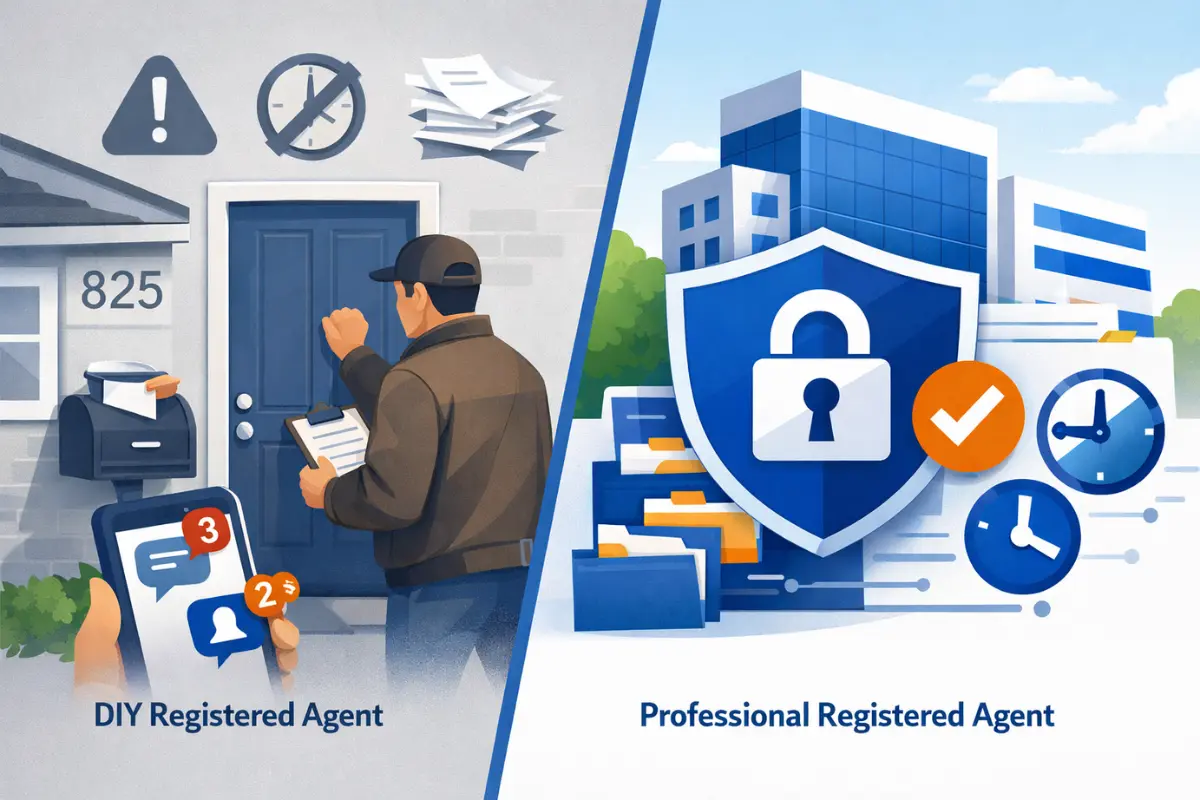
Consider your privacy needs, since using a registered agent service keeps your home address off public records. Evaluate your availability and ask yourself if you can consistently be at one address during all business hours. Think about business growth, as expanding into multiple states is much easier with a professional service. Assess reliability requirements, because professional services offer systematic document handling. Finally, compare costs and benefits, since annual fees are small compared to potential penalties or privacy risks.
Professional registered agent services provide advantages that extend beyond basic compliance. For most business owners, these benefits justify the modest annual investment.
Professional services guarantee availability during all business hours, provide compliance calendars and deadline tracking, offer digital document management with online portals, and ensure professional handling when legal documents arrive.
Privacy represents one of the most valuable benefits: keeping your home address private on public records, reducing unwanted solicitations, maintaining separation between business and personal life, and protecting against embarrassment from process servers arriving at your residence.
Having a reliable resident agent for LLC operations provides multi-state expansion support, continuity during transitions, a professional image to clients and partners, and freedom to focus on business growth rather than compliance monitoring.
Understanding what is a registered agent for LLC operations isn't just about checking a box—it's about establishing reliable legal and compliance infrastructure. Every LLC needs a registered agent, and choosing the right approach impacts your privacy, peace of mind, and operational efficiency.
For most business owners, professional registered agent services offer the best combination of reliability, privacy protection, and convenience. The modest annual investment protects against missed legal deadlines, shields your personal information from public databases, and provides professional compliance support as your business grows.
MyLLC's professional registered agent services protect your privacy, help with compliance support, and give you peace of mind. We handle receiving legal documents, forwarding compliance notices, and providing digital document delivery with multi-state coverage.
Ready to establish reliable registered agent services for your LLC? Contact MyLLC today to simplify your business formation and ongoing compliance needs.
Yes, if you meet state requirements: maintaining a physical address in the formation state, availability during business hours, and being 18 or older. However, your personal address becomes public record. Many business owners find professional services better protect privacy.
Missing service of legal documents can result in default judgments against your LLC, meaning you could lose without even knowing the case existed. Professional services use organized processes to ensure no important documents are missed.
Professional services typically charge $100-$300 annually. This modest investment protects against expensive consequences of missed deadlines while keeping your personal address private.
Yes, you can do this by filing a "Statement of Change of Registered Agent" with your state. Professional services often handle this paperwork for you. Make sure to maintain continuous coverage and avoid removing your old agent before appointing a new one.
Yes, you must maintain a registered agent in each state where your LLC is registered. Professional services can handle requirements in all states, centralizing document management.
The terms mean the same thing; both refer to the person or entity designated to receive legal documents on behalf of your LLC. Different states use different terminology (some also say "statutory agents"), but the role itself is the same.
The registered office address is where your registered agent receives legal notices, government correspondence, and important documents during normal business hours. This address appears in public record when you file formation documents with the business entity filing office. Using a professional registered agent service makes their office your registered office address, protecting your personal address.
Yes, a friend or family member can serve as your registered agent for an LLC if they're physically present at a business address during regular business hours to receive legal documents. However, their address becomes public record. Many small business owners find a commercial registered agent or national registered agent service provides better reliability for service of process.
A registered agent receives service of process from lawsuits, tax documents, annual report notices, government correspondence, legal notices, and other important materials from the state filing office. The process server delivers legal papers to the agent's address during standard business hours. Registered agents play a crucial role because missing important legal documents could lead to a default judgment.
When you conduct business in multiple states, you need a registered agent in every state where your limited liability company is registered, including any foreign LLC filings. A national registered agent service can represent your corporation in all states, offering a more reliable option than relying on a friend or family member in each location.
Find your registered agent information by checking formation documents or searching your state's business entity filing office database, where your registered agent's name, registered agent's address, and location are on public record. To update, file a registered agent form with the state. The right registered agent or reliable registered agent service will help complete this process and keep your LLC's registered agent information current with state laws.
A registered agent for an LLC is the official contact who receives legal documents, government notices, and other important communications on behalf of the business. States require every LLC to have one to ensure reliable delivery of these materials during business hours. Without a registered agent, your LLC risks falling out of good standing or facing administrative dissolution.
Yes. Limited liability partnerships, corporations, and most business entities must have a registered agent, just like LLCs. The agent's address serves as the official location for receiving legal and government documents during business hours. This requirement applies to both domestic and foreign entities to ensure timely delivery of official communications.
You can't legally conduct business or open a bank account without appointing a registered agent. Banks verify this to confirm your LLC is properly formed and compliant with state laws. The registered agent's address becomes part of the public record and is used for delivering legal or government documents. Whether you serve as your own agent or hire a professional, one must be listed before you begin operations.
Being your own registered agent means using your personal address on public record and being available at that location during all business hours to receive legal documents. While it saves money, it risks your privacy and requires constant availability. Professional services use a dedicated office to handle legal and government documents for you, keeping your personal address private and ensuring nothing important is missed—ideal for those who travel or value privacy.