
What happens when a business partnership that once worked well becomes a source of conflict?
Disagreements over money, control, or business direction can quickly turn an LLC partnership into a legal and financial risk. Knowing how to get out of an LLC partnership the right way helps protect your assets, limit liability, and avoid costly compliance mistakes.
This guide explains your legal options for exiting a partnership LLC, whether through withdrawal, buyout, or dissolution, so you can move forward with clarity and confidence.

Your operating agreement is your roadmap: This document outlines the specific procedures for how to get out of an LLC partnership, including buyout terms, voting requirements, and valuation methods.
State laws fill in the gaps: When your operating agreement doesn't address exit procedures, your state's LLC statutes determine the partnership dissolution process and member removal requirements.
Multiple exit options exist: You don't always need full dissolution. Alternatives include transferring membership interest to another party, negotiating a buyout with remaining members, or selling your share to an outside buyer.
Professional guidance protects your interests: Business attorneys and accountants help you navigate complex legal requirements, handle tax implications, and ensure your exit doesn't expose you to unexpected liabilities.
Before diving into how to remove a member from an LLC or exit yourself, it helps to understand what you’re actually dealing with.
Under most state laws, any person who is a member of an LLC has the legal authority to initiate withdrawal from the LLC. This action can have significant legal implications, such as triggering buyout provisions, affecting the LLC’s operations, and potentially leading to dissolution if not properly addressed in the operating agreement.
A Limited Liability Company combines liability protection of a corporation with tax flexibility of a partnership. Your personal assets stay protected from business debts while you avoid double taxation. When multiple people own an LLC, they're called members who can manage directly or appoint managers.
Equal partnership LLCs split ownership evenly with identical voting rights. Unequal partnership LLCs distribute ownership with percentages and voting rights determined based on capital contributions or negotiated terms. Manager-managed LLCs designate specific members to run operations while others act as silent investors.
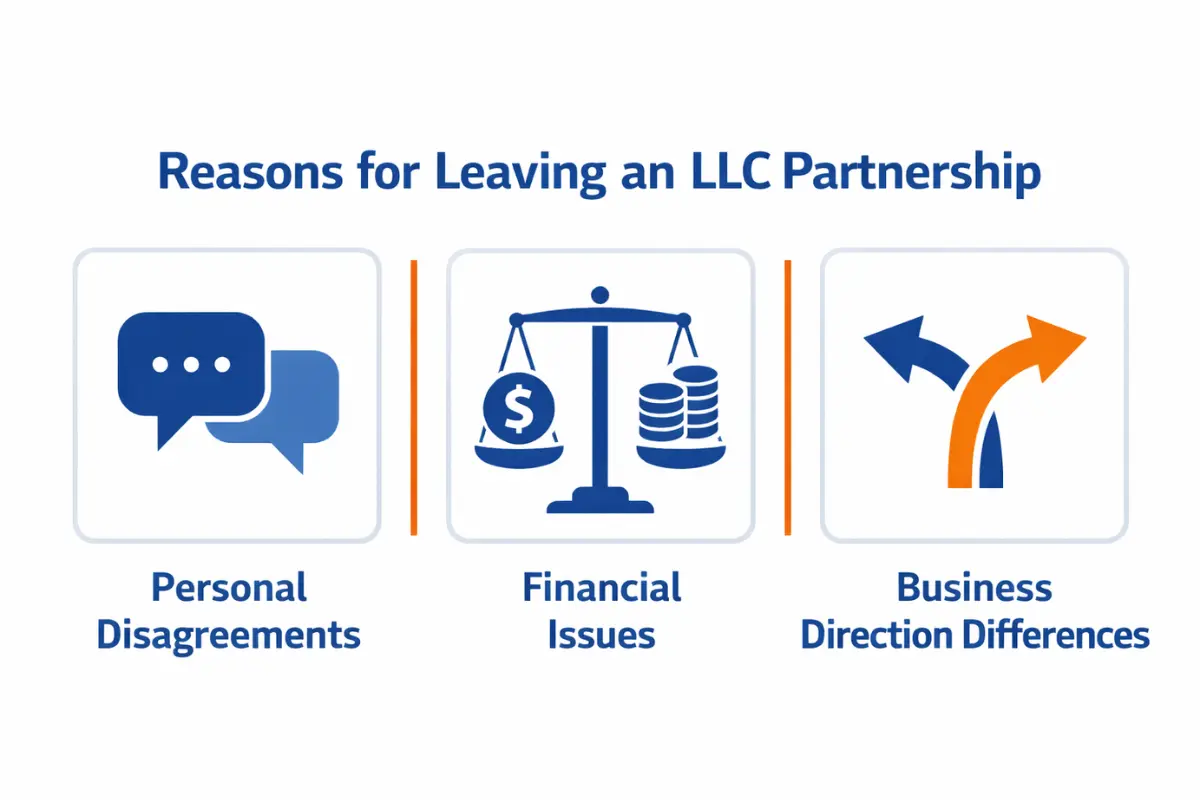
Understanding why members leave helps you approach your exit strategically and choose the best exit method.
Minor communication issues can escalate into fundamental conflicts. Maybe your co-founder's management style clashes with yours, or relationships have deteriorated. These situations often require the cleanest possible break.
Money problems destroy partnerships fast. One member might contribute far more capital or effort than others. Distribution disagreements simmer before boiling over. Sometimes the business doesn't generate enough profit to support multiple members.
Vision conflicts happen in successful partnerships. You want to scale aggressively while partners prefer steady growth. These strategic disagreements aren't necessarily anyone's fault, but they make continuing together impractical.
The partnership dissolution process follows specific steps that protect both you and remaining members. Skipping steps creates legal complications.
Your first move is to consult your LLC’s operating agreement. This document acts as your business "pre-nuptial," overriding general state laws with specific rules for your partnership.
As Forbes notes: "The operating agreement is the ultimate 'pre-nuptial' for business partners. Without one that clearly defines exit strategies and valuation methods, you are essentially leaving your financial future up to state default laws."
Scan your agreement for these four critical pillars:
Withdrawal Rights: Does it allow you to leave voluntarily, or do you need a majority vote?
Buy-Sell Provisions: Who has the first right to buy your shares?
Valuation Formula: How is your share’s price calculated (e.g., book value vs. market value)?
Payout Timeline: Will you receive a lump sum or installments over time?
If your agreement is silent on these points, your exit will be governed by the default (and often less favorable) statutes of your state.
State LLC statutes provide default rules when your operating agreement is silent. Some states allow withdrawal with proper notice, while others restrict it or require consent. As the U.S. Small Business Administration notes, “failure to legally dissolve an LLC or corporation with any state you’re registered in will expose you to continued taxes and filing requirements.” In other words, failing to properly dissolve your LLC can expose you to continued taxes and filing requirements even after you've stopped operating.
Consulting a business attorney in your state helps you navigate these requirements correctly the first time
Written notification to all members creates the official record of your exit intent, and it is crucial that all notifications and agreements are put in writing to ensure clarity and legal enforceability. Your notice should include withdrawal date, relevant agreement provisions, proposed terms, and acknowledgment of continuing obligations. Send via certified mail.
Before you withdraw from the LLC, make sure all company obligations are clearly identified, including accounts payable, contract commitments, pending lawsuits, and any tax liabilities. Paying close attention to these items helps prevent surprise claims against you after you exit.
Next, the LLC’s assets should be valued at their current fair market value so everyone understands what the business is actually worth. Your share of liabilities must then be addressed, and all outstanding debts, taxes, and other obligations should be paid before any remaining LLC assets are distributed.
When it is time to distribute what is left, calculations typically take your capital account balance and any agreed‑upon buyout terms into account. Because these steps often trigger capital gains or other tax consequences, consulting a qualified tax professional is important to understand the full impact of your exit.
Sometimes you are not the one choosing to leave; instead, the other members may want to remove you from the LLC. In other situations, you may be the remaining member trying to remove an LLC member whose conduct is harming the business. In either case, it is important to understand the legal rules and procedures that govern member removal.
If good‑faith negotiations fail or you reach a deadlock that cannot be resolved, court involvement may be required. In serious cases involving mismanagement, misconduct, or ongoing deadlock among the members, a court can order judicial dissolution of the LLC and supervise the winding‑up of the company.
You generally cannot remove an LLC member without clear, legally valid reasons. Common grounds include a serious breach of the operating agreement, such as failing to make required capital contributions or misusing company funds, as well as events like incapacity, death, bankruptcy, or insolvency that prevent the member from continuing to participate in the business.
How to remove a member from an LLC follows a structured legal process. First, verify you have proper grounds for removal. Next, follow voting requirements specified in your operating agreement. Provide formal written notice to the member being removed. Handle buyout obligations according to your operating agreement's valuation and payment terms. Update state filings and notify relevant parties about the membership change.
Proper documentation creates a clear record of the removal. Member meeting minutes should capture key discussions and votes, while a written removal resolution formally records the decision. Settlement agreements can set payment terms and release of claims, and the operating agreement should be amended to reflect the updated membership structure.
Full dissolution or complete withdrawal aren't your only options. Several alternatives let you exit while keeping the business intact for remaining members.
Transferring your membership interest lets the LLC continue operating while you step out as an owner. An internal transfer means selling your interest to one or more existing members, while an external transfer involves selling to a new member, often subject to existing members’ contractual right of first refusal under the operating agreement.
Selling your ownership share is complex and usually benefits from professional legal and financial guidance. A business valuation typically relies on asset-based, income-based, or market comparison methods to determine a fair price. Negotiating the deal often involves agreeing on the purchase price, how and when you will be paid, and whether a non-compete or similar restrictions will apply after you leave.
Exiting an LLC partnership isn’t just a legal and financial process—it also carries significant tax consequences. Paying close attention to tax implications is paramount to ensure a smooth transition and avoid unexpected liabilities.
Your LLC operating agreement often outlines how profits, losses, and distributions are allocated. When a member leaves, the IRS requires specific documentation to close out that member's tax responsibility.
According to the Internal Revenue Service (IRS): "A partnership must file Form 1065... for the year it stops doing business. When a partner leaves, the LLC must provide a 'Final K-1' to that member, which reflects their share of profits, losses, and capital up to the date of their departure."
Selling or transferring your membership interest may trigger capital gains taxes, depending on the purchase price and your original investment. The IRS treats the sale of an LLC interest similarly to the sale of other business assets, so it’s crucial to determine the fair market value and document the transaction properly.
Outstanding tax liabilities must be settled before your departure is finalized. This includes ensuring all payroll, sales, and income taxes are paid up to your exit date. Failing to address these obligations can leave you exposed to future liability, even after you’re no longer an LLC member. Because tax rules for limited liability companies can be complex, consulting with a tax professional before negotiations begin is strongly advised to protect your financial interests.
Learning how to get out of LLC partnership properly protects your financial interests and professional relationships even as business circumstances change. Whether you're facing personal disagreements, financial challenges, or strategic differences, the partnership dissolution process offers clear steps for navigating your exit.
Your operating agreement and state laws provide the legal framework, but professional guidance ensures you handle valuation, documentation, and compliance correctly. The alternatives to full withdrawal, from transferring membership interest to structured buyouts, give you flexibility in how you separate from the business.
Understanding how to remove a member from an LLC or exit yourself empowers you to make informed decisions rather than costly mistakes during what's already a challenging transition.
It depends on your operating agreement and state law. Some agreements allow voluntary withdrawal with proper notice, while others require unanimous or majority member approval. Review your operating agreement first, then consult your state's LLC statutes to understand your specific rights.
Your ownership interest typically gets redistributed among remaining members, sold to a new member, or purchased by the LLC itself. The specific outcome depends on your operating agreement's buyout provisions. The business valuation determines what you receive for your ownership stake.
You generally remain liable for debts that arose while you were a member unless creditors specifically release you. Future debts incurred after your official departure typically don't attach to you. However, personal guarantees you signed may continue binding you even after exit unless the lender agrees to remove you.
Timeline varies significantly. Simple exits with clear operating agreement terms might resolve in 30-60 days. Complex situations involving valuation disputes or contentious negotiations can extend for months. Starting the process early and maintaining clear communication helps accelerate resolution.
While not legally required, professional legal guidance is strongly recommended. Attorneys help you understand your rights, navigate state law requirements, protect yourself from continued liability, and ensure proper documentation. The cost typically proves minimal compared to potential losses from mistakes.
A separation agreement is a legal document between you and the remaining partners that outlines the terms of your departure. This agreement typically addresses your ownership interest valuation, payment terms, future liability protection, and release of claims. The departing member and other members sign this document to formalize the exit terms and prevent disputes. Most LLC partnerships benefit from a written separation agreement even when the split is amicable, as such documents provide paramount importance for protecting all parties involved.
You must provide written notice to all other members according to your LLC operating agreement requirements. Your partnership agreement may specify notice periods, typically 30-90 days. The written notice should include your withdrawal date, reasons for departure if required, and reference relevant provisions in your LLC formation documents. State LLC laws often require written documentation even when your operating agreement doesn't specify the process. Properly notify all remaining partners simultaneously to ensure transparency and maintain good faith during negotiations.
Outstanding tax liabilities and business debts require careful attention during your exit. The withdrawing member typically remains liable for debts incurred while you were an LLC member unless creditors specifically release you. This includes commercial leases, vendor contracts, and business loans where you signed personal guarantees. Your buyout agreement should address how the partnership's assets and liabilities get distributed, including any money paid to settle your capital account. State statutes frequently require legal counsel to ensure you're no longer liable for future obligations. Limited liability companies provide protection from future liability after proper exit, but material breaches or improper dissolution can expose you to continued responsibility.
Navigating how to get out of an LLC partnership involves complex legal requirements. Getting guidance from legal counsel helps you avoid costly mistakes during this transition.
Once you've exited, you might be ready to start fresh. Perhaps you're ready to go solo this time. When you're ready to form a new LLC, MyLLC make the process simple. We handle formation paperwork, establish proper operating agreements that address potential exit scenarios, and provide ongoing compliance support.
Contact MyLLC today and let us help you build a solid foundation from day one.
Disclaimer: This guide is for general informational purposes only and does not constitute legal or tax advice. Consult a qualified tax professional for advice tailored to your specific situation.