

What happens when a business license expires? Most business owners don't think about this until they're facing fines or forced closure. The reality is that business licenses don't last forever, and missing a renewal deadline puts everything you've built at risk. This guide will explain how long business licenses last, how often you need to renew, and what happens if you operate with an expired license.
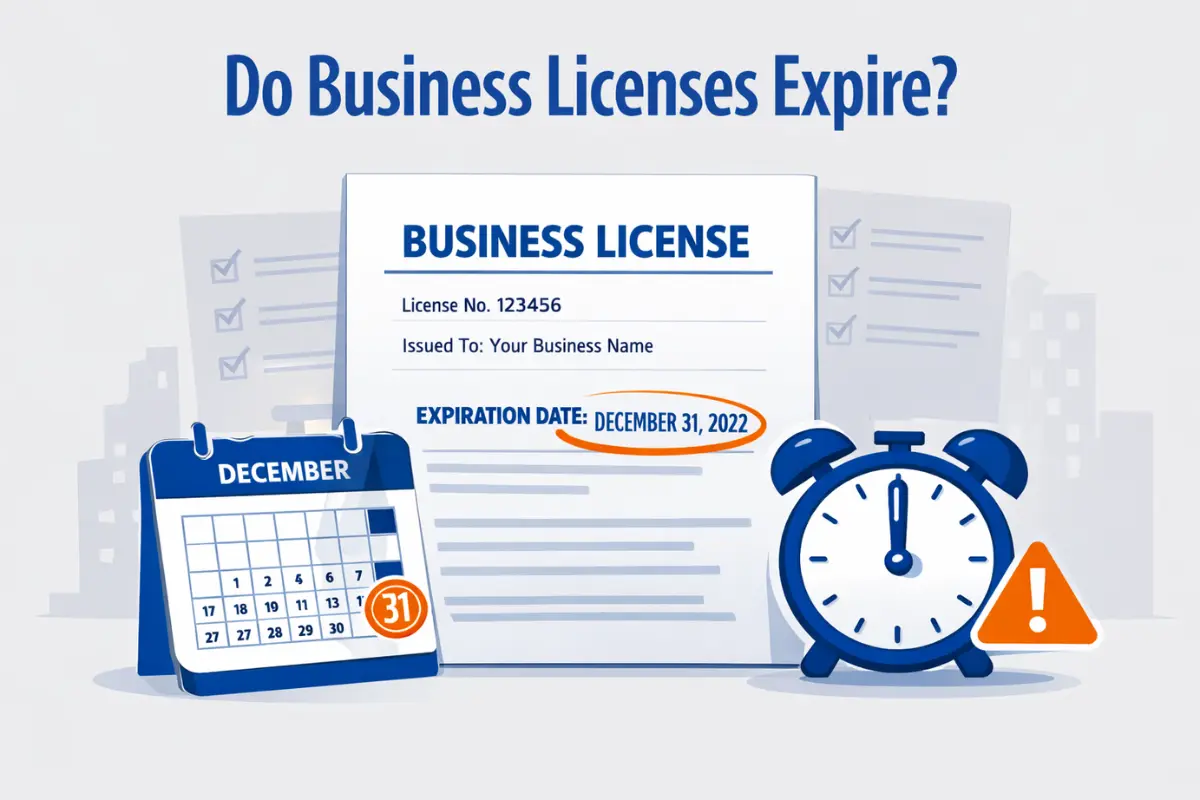
Yes, business licenses expire: Most business licenses have expiration dates and must be renewed regularly to maintain legal compliance.
Renewal frequency varies: License renewal periods typically range from annual to biennial, depending on your location and industry.
Operating with an expired license is illegal: Running your business without a valid license can result in fines, penalties, forced closure, and legal liability.
Track renewal deadlines: Set calendar reminders and monitor state and local government websites to avoid missing critical renewal dates.
Plan for renewal costs: Budget for license renewal fees, which can vary significantly based on your business type, location, and industry.
A business license is a legal permit issued by government authorities that authorizes you to operate within a specific jurisdiction. According to the U.S. Small Business Administration, most businesses need licenses or permits at the federal, state, and local levels, and many must be renewed periodically.
General Business Licenses are required by cities or counties to operate any business.
Professional Licenses apply to occupations requiring specialized training like doctors or contractors.
Industry-Specific Permits target particular business types—restaurants need health permits, bars need liquor licenses.
Federal Licenses are required for federally regulated industries like firearms or aviation.
Yes, business licenses expire. This isn't optional or negotiable; it's a standard requirement designed to ensure businesses maintain compliance with current regulations, pay appropriate fees, and continue meeting professional standards.
Most business licenses follow annual renewal cycles, expiring every twelve months. Many expire on December 31st or on your license anniversary date. Some jurisdictions use biennial cycles with two-year renewals, common for professional licenses. Certain industries face shorter periods; food service establishments might need quarterly renewals to maintain safety standards.
Location determines renewal schedules; each city, county, and state sets different requirements. Business type matters too; high-risk industries face more frequent renewals. License level creates complexity since federal, state, and local licenses have different renewal cycles.
General business licenses typically last one year. Professional licenses commonly span one to three years depending on the profession and state. Sales tax permits don't traditionally expire but require regular reporting. Specialized permits like health permits or alcohol licenses often require annual renewal with compliance verification.
Duration varies dramatically across states and localities. Some states use biennial professional license renewals, while others stick with annual cycles. Major cities often implement more frequent renewals than smaller towns. You must verify specific requirements for every jurisdiction where you operate.
Annual renewal represents the standard for most business licenses. This cycle allows governments to verify businesses are operating, collect fees, and confirm compliance. Business owners often overlook renewal dates and deadlines, yet tracking these requirements is essential to avoid penalties, as Forbes notes. Many jurisdictions send renewal notices 30 to 60 days before expiration, but you can't rely on these—set your own calendar reminders.
Food service establishments often need quarterly health inspections alongside annual renewals. Childcare facilities require annual renewals plus periodic inspections. Healthcare providers face complex schedules combining professional licenses and facility permits. Construction contractors juggle multiple permit types with separate expiration dates.
Most general business licenses require annual renewal. Professional licenses sometimes offer biennial cycles, especially where standards change gradually. Even with biennial renewals, many require continuing education credits throughout the period. Plan on renewing regularly and budget renewal fees into your annual operating expenses.
Exemptions from renewal are rare. Some jurisdictions offer grace periods of 30 to 90 days for late renewals with penalties. Military service members may qualify for extensions under the Servicemembers Civil Relief Act. Natural disasters occasionally trigger automatic extensions. Don't count on exemptions or extensions—plan to renew on time.
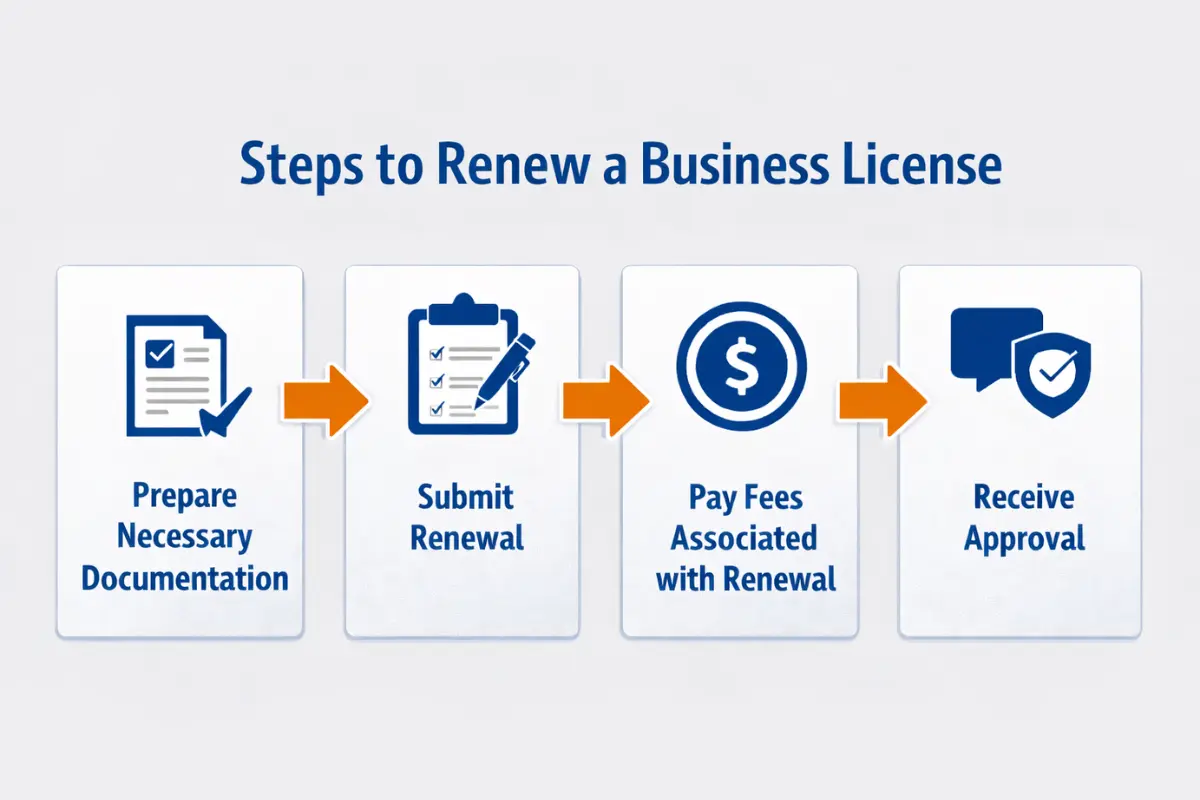
Gather required documentation including your business license number, EIN, proof of address, and any industry-specific certifications. Professional renewals often require continuing education proof and insurance certificates. Having documentation ready prevents delays.
Most jurisdictions offer online renewal 30 to 60 days before expiration. Log into the government website, verify business information, upload documentation, and pay fees. Some areas still require paper applications with longer processing times. After approval, you'll receive a renewed license certificate.
Renewal fees vary by location and business type, ranging from $50 to several hundred dollars. Professional licenses typically cost $100 to $500. Some jurisdictions calculate fees based on revenue or employees. Late renewals add penalties of 10% to 50% plus potential daily charges. Budget these costs as annual operating expenses.
Operating with an expired license is illegal. Regulatory agencies can issue cease and desist orders requiring immediate shutdown. Criminal charges are possible for willful operation without licensing, especially in regulated industries. Your contracts might become unenforceable if you're operating illegally. Professional violations can affect your ability to practice anywhere.
Fines typically range from $500 to $5,000 with daily penalties for continued violations. Forced closure means lost revenue while still paying fixed costs. Insurance policies might be void during unlicensed operations, leaving you personally liable. Legal fees for defending violations can cost thousands. Reputation damage has long-term financial implications as customers question your professionalism.
Business licenses do expire, and keeping them current protects your business from penalties and closures. Set calendar reminders at least 60 days before deadlines, check government websites regularly, and keep documentation organized for quick renewals. The small effort required to stay on top of renewals prevents massive headaches from lapsed licenses.
Yes, most jurisdictions allow late renewals with penalties. Grace periods vary—some offer 30 to 90 days with fees. Contact your licensing authority immediately to minimize penalties.
Missing the deadline makes operations illegal. You'll face late fees and possible cease and desist orders. Some jurisdictions impose daily penalties until you renew.
Check your license certificate for the expiration date. Most jurisdictions send notices 30 to 60 days before expiration. You can log into your city's licensing website to view all active licenses and dates.
No, frequency varies by business type and industry. General business licenses typically renew annually, while professional licenses might use biennial cycles. High-risk industries face stricter renewal schedules.
Exemptions are rare and jurisdiction-specific. Some areas exempt very small home-based businesses below certain revenue thresholds or specific nonprofits. Most exemptions apply to initial licensing rather than renewals.
If you applied before expiration, most jurisdictions allow operations under your existing license until approved or denied. If already expired when applying, you may need to cease operations until approval.
Yes, most jurisdictions allow you to renew online. Log into your account, enter your license number or business name, complete the renewal form with your address and ownership details, and submit payment. Street vendors, corporations, and limited liability company structures may have specific online portals. Check your city website to determine if you're eligible to renew online.
This varies by location. Many cities set December 31st as the last day when general business licenses expire. Others use anniversary dates—if you register in January, your license expires the following January. Check your certificate, contact your licensing office, or visit your city website. Different permits may expire on different dates, so track each separately to maintain good standing.
You'll need your license number, business name, address, and contact information. Renewal forms request your business structure—sole proprietorship, partnership, limited liability company, or corporation—with ownership details and employee count. If your business operates from multiple locations, you may need separate licenses. Some jurisdictions calculate fees based on gross receipts revenue. Professional licenses require continuing education proof. If you use a registered agent, confirm their information. Having all business information ready helps you complete forms efficiently.
Managing business license renewals and compliance can feel overwhelming when you're running a business. Our experienced professionals help with complex compliance requirements so you can focus on your business. We provide registered agent services ensuring you receive all official correspondence, comprehensive formation services, and ongoing compliance support.
Contact MyLLC today to get expert guidance tailored to your situation and protect your business from compliance gaps and penalties.